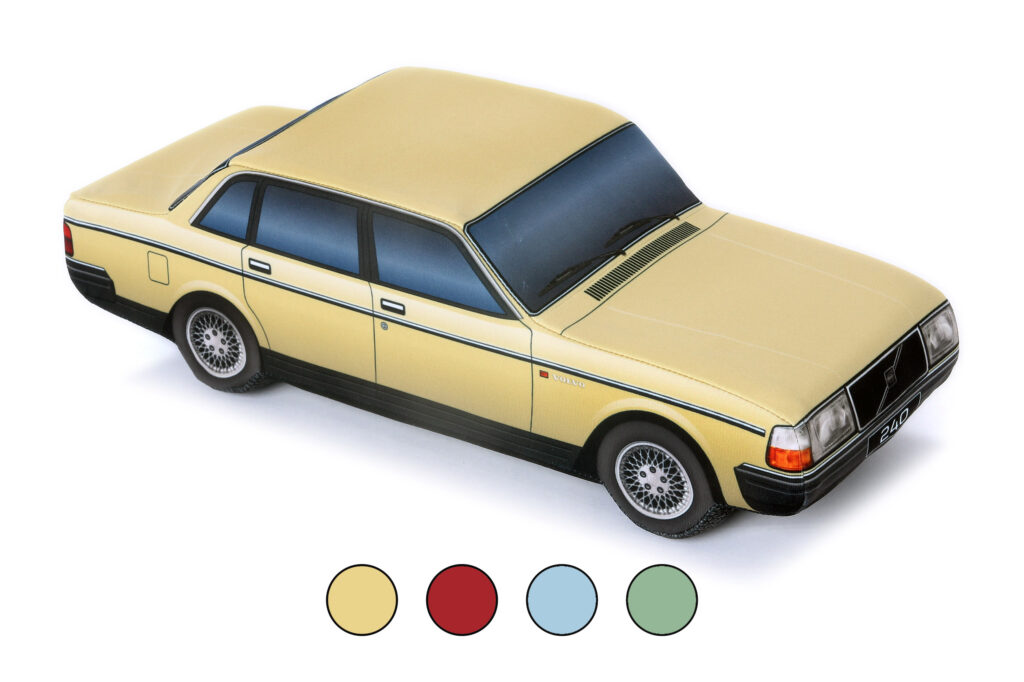
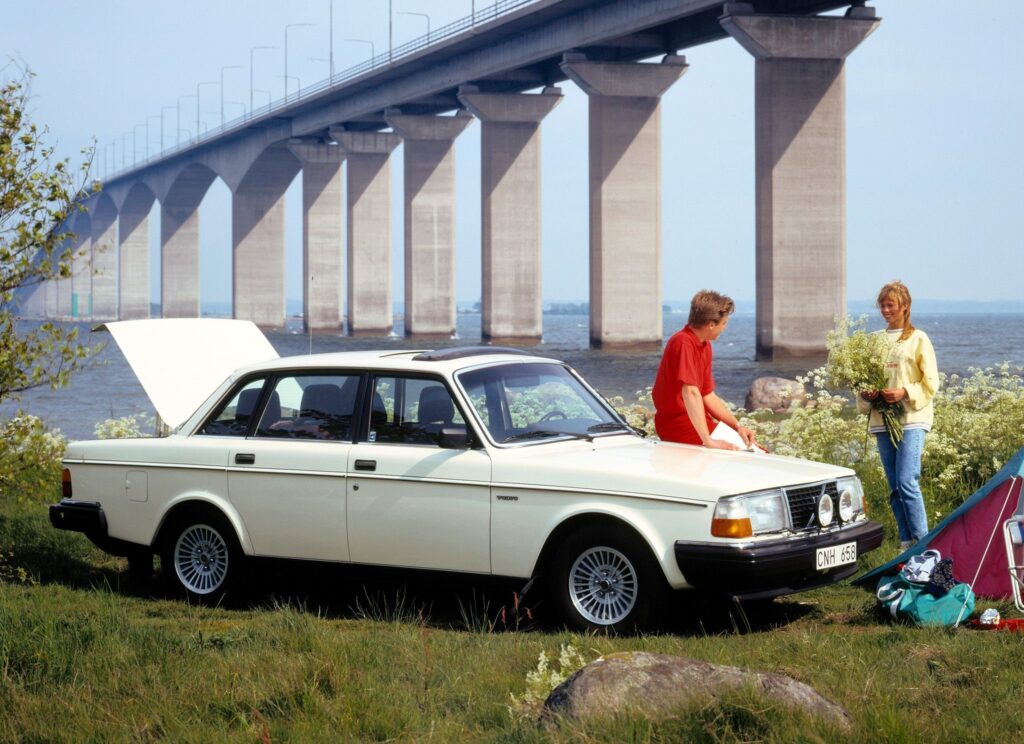
In the 1970s, Volvo’s reputation for safety reached new heights with the introduction of the 240 model. The successor to the 140 series debuted in 1974 with its distinctive boxy design, which was not only cost-effective for production but also improved safety. It remained available until 1993, during which time customers could choose between versions with 2 doors (242), 4 doors (244), and a station wagon (245), as well as various engine options.
Did you know?
In the 1960s and 1970s, the number of fatalities in traffic accidents reached the highest levels in the history of the automotive industry, making it clear that changes in safety were necessary. Volvo believed that people would gladly buy a car that prioritized safety, so they developed numerous prototypes to test new safety features. One of these was the Volvo VESC (Volvo Experimental Safety Car), presented in 1972. It was designed to withstand a frontal collision at a speed of 80 km/h (50 mph), and in the event of a crash, the engine would slide under the passenger compartment – a standard feature today.
Some improvements:
- ABS
- Reverse warning signal
- Front and rear airbags
- Automatic fuel cutoff in case of an accident
- An early version of a rearview camera
A large part of the Volvo VESC significantly influenced the upcoming 200 series.
- Link to an article about the VESC

- The Volvo 240 quickly set new safety standards in the automotive industry. Due to its development under extremely strict safety requirements, in 1976, the National Highway Traffic Safety Administration (NHTSA) selected the Volvo 244 as a benchmark for future safety work.
Many drivers believed that they would not have survived traffic accidents if they had been in any other car. This led Volvo to establish the “Volvo Saved My Life Club” in 1990, where people could share their experiences.
Besides safety, the 240 model also led in environmental responsibility. It was the first car to feature a three-way catalytic converter and the Lambda sensor system, introduced in 1976, which optimized fuel combustion, reduced emissions, and earned it the title of the cleanest car in the USA in 1978.
- The Volvo 240 was in production for almost 20 years (1974–1993), without undergoing a complete generational overhaul, which is extremely rare in the automotive industry. For comparison: the Honda Civic, in a similar period (1972–1991), went through four generations, while the Ford Mustang had three generations between 1979 and 2005. The 200 series even outlived its successor, the also successful 700 series, which was introduced in 1982 and discontinued in 1992.
The fact that the Volvo 240 remained technologically and commercially relevant for nearly two decades speaks to its quality, safety, and timeless design. Throughout its 19-year production period, Volvo continuously improved the 240 model to adapt to changing customer needs and rapid technological advancements. Although it had only one generation over the years, it was available in many versions and with various trim levels, allowing it to meet a wide range of consumer demands.
- Example of the numbering system for the 200 series:

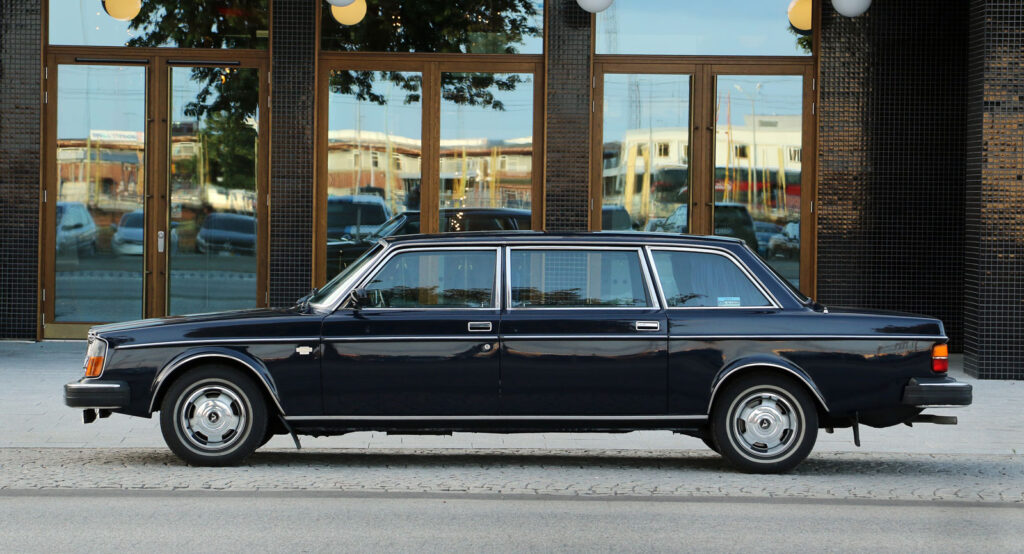
- There was even a limousine version – the Volvo 264 TE (1976).
- In 1981, Volvo introduced the 240 model with a new turbo engine. It proved that Volvo was not only capable of producing safe and durable cars but also fast and fun-to-drive ones. The turbo engine produced 155 horsepower, allowing the 240 Turbo to accelerate to 100 km/h in 9 seconds and reach a top speed of 195 km/h (120 mph). The 240 Turbo Estate was, for a short time, the fastest station wagon in the world.
In 1982, a new Group A racing competition was introduced and its regulations were perfectly suited for the new Volvo 240 Turbo. To compete, the car received additional improvements, creating the Volvo 240 Evolution, which produced approximately 300 horsepower and reached a top speed of around 260 km/h (160 mph). One of the competition requirements was that the manufacturer had to produce at least 500 Evolution vehicles.
Volvo sent regular 240 Turbo models to the United States, where the cars were to be inspected and approved, and added the improvements there. Once the cars were inspected and approved by the FIA (Fédération Internationale de l’Automobile), they simply removed the enhancements, except for the upgraded intercooler, and sold these vehicles in the USA as the 240 Turbo Intercooler model. This sparked some controversy, but Volvo merely took advantage of a legal loophole in the FIA regulations, which did not require Evolution vehicles to be sold to the public, only built and inspected before homologation status was granted.
The year 1985 was a golden year for Volvo in motorsport. The so-called “Flying Brick” won the European Touring Car Championship (ETC) and its German equivalent (DTM).
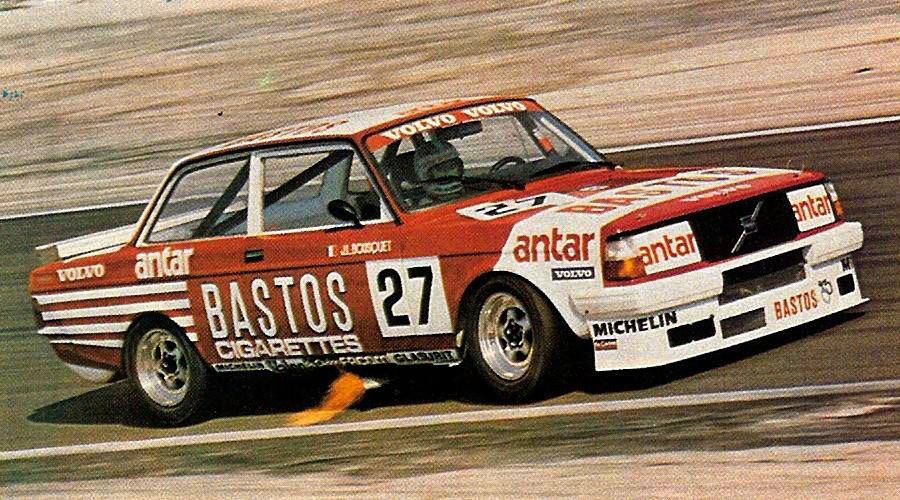
With the 200 series, Volvo proved that safety must always come first in traffic. Numerous safety improvements and the quality of these cars resulted in more than 2.8 million vehicles sold over 19 years. In addition to being one of the safest cars of its time, the station wagon version was extremely practical, while the turbo version was highly successful in motorsport. Undoubtedly, it remains one of Volvo’s most iconic models.